Monstera deliciosa is a plant that from its name would not seem like a great achievement for the home.
In short, «Monstera», just remove the last letter and we immediately find ourselves in a horror film, perhaps one of the B series ones, a little tacky with the actors walking around in costume making strange noises to try to increase the questionable credibility a little. Well, maybe it’s picturesque but this one jumps to mind.
Too bad we couldn’t be further from the truth. The Monstera deliciosa can certainly be linked to the figure of a monster, but there is nothing tacky about it! In fact, what we are talking about today is a beautiful indoor plant, an ornamental that will not scare anyone but will be able to give character to your rooms!
The Monstera genus
Monstera is a genus belonging to the Araceae family (the same as calla lilies). Its birthplace is found in the tropical areas of Latin America, although Monstera has now expanded to grow spontaneously in tropical countries. Looking at her you would never say but in addition to being an evergreen perennial it is also a climber!
Have you seen it displayed many times and the impression it gave you wasn’t that of a classic climber?
Very true, I believe you. As I told you before, Monstera can be linked to the image of a monster and the main reason is precisely this. A bit like a monster, Monstera plants grow and look for a hold. Once found they begin to climb thanks to the aerial roots that develop from the nodes placed on the stems. Then little leaves emerge which slowly climb up and carry the plant upwards. In nature this normally happens between one tree and another, the small Monstera climbs until it reaches an optimal height from which it can have a good level of light and thus develop fully.
In short, it is a monster that needs to reach the light, as in the best fairy tales, in order to truly leave its initial form and evolve into a beautiful creature.
Delicious monstera
Another peculiarity of this plant are the leaves, in fact you don’t have to worry if you see holes on the leaf blade, once the Monstera has grown, it’s perfectly normal. Monstera is characterized by large leaves (they can even exceed one meter in diameter) and, thanks to this «prickling» they are very resistant to the wind which cannot break them.
Furthermore, the name «Monstera» was attributed to this genus precisely because of its large leaves.
Monstera deliciosa, a perfect houseplant
Monstera has become one of the most beloved genera of ornamental house plants. Having arrived at the beginning of the 19th century from Mexico, it quickly won everyone’s liking. If you have heard of the delicious Monstera fruits (hence the term «deliciosa» for its most famous variety), I am sorry to tell you that, a bit like the banana tree, they will not grow in houseplants, they are in fact the prerogative of plants that grow in tropical countries.
However, in an apartment your Monstera will develop without problems. It is a very resistant and versatile plant. The only problem it could give you comes from the size of the leaves, but with due maintenance it is possible to keep it in dimensions suitable for your home, but it is better to reserve it for sufficiently large spaces.
Another positive note of Monstera is its longevity: lives over 30 years! Each leaf can live up to 5 years, which is why it is really important to take good care of it.
Monstera deliciosa is the most widespread of the Monstera. Just think that we normally keep it in the apartment but in Mexico, its country of origin, this plant can even reach 6m in height!
Let us always remember that it is a climber, so the ideal, once the plant has exceeded 30cm, is to provide it with a brace on which it can climb. This will allow it to develop better and increase stability.
Monstera deliciosa is not only a beautiful plant to keep as a home decoration but it is also a precious collaborator for the well-being of the environmentsthis according to the NASA study, in the 80s, but is it true? Find out in this article!
Care and cultivation of Monstera deliciosa
Like any self-respecting monster, the Monstera deliciosa is strong and resistant! Taking care of it is very simple, you just need to follow a few precautions which I will tell you about now.
What soil to use for Monstera deliciosa?
The Monstera is not very demanding when it comes to soil. A universal soil for green plants will be fine to make it grow at its best! As for repotting, it should be done as needed, more or less every 2-3 years.
Where to place the Monstera deliciosa?
Delicious monstera loves light very much. As a legacy of its origins it requires good lighting but does not tolerate direct sunlight which could cause spots on the leaf blade. If during the summer months you decide to take it out therefore be careful not to leave it in excessively sunny places.
On the contrary, in case of poor light we could witness a phenomenon similar to leaf regression, in fact they will lose their jaggedness and become smaller.
How much water does Monstera deliciosa want?
Watering is a very important phase to best take care of this plant. In summer, like many other species, Monstera deliciosa will also require more frequent watering, while in winter it can go down to one every 10-15 days. The important thing, however, is to be sure that the soil is dryin this way we will reduce the risk of water stagnation which could cause serious damage to the plant.
The right temperatures for Monstera deliciosa
Monstera is a tropical plant, for this reason He doesn’t like the cold very much. It can withstand temperatures up to a minimum of 11° but he certainly doesn’t find them comfortable for his growth. The optimal temperature is very close to that of an apartment, ranging from 19 to 22°C.
How to fertilize Monstera deliciosa?
THE Monstera is very sensitive to fertilizationso much so that if you overdo it it can lead to an imbalance in the plant which will cause its leaves to grow considerably, causing inconvenience if you keep it indoors.
The ideal fertilizer is a liquid fertilizer for houseplants containing nitrogen, phosphorus and potassium; all diluted with water. Furthermore, if the Monstera is young it will need to be fertilized more often (about 2 or 3 times a year).
I will propagate Monstera delicious
It is reproduced easily using cutting during the summer months. It is best to immerse the stem with a few leaves in a container full of water.
Monstera deliciosa problems
Monstera is a rather resistant plant. Similar to Edgeworthia, it is rarely attacked by parasites. However, if this were to happen the main suspects would be aphids or plant lice.
I also remind you that Monstera deliciosa is subject to root rot, so water stagnation must be absolutely avoided!
Saving a Monstera after the winter
After the winter it is not difficult for our Monsteras to be in rather critical conditions. Sometimes it may happen that it is indicated that the Monstera deliciosa survives well in poorly lit areas of the house, but, especially during the cold months, this is not true, in reality, it is a plant that it somatizes the lack of light a lot.
Often yellowing and browning are not only on the external part of the leaf blade, they can appear as circular spots with a yellow center and browned edges (or vice versa). These symptoms can be traced back to poor light.
Here are some simple steps to try to save your Monstera deliciosa!
- Run one general cleaning of the plant (also remove the aerial roots);
- check the health of the root system, making sure that an overpotting situation has not occurred;
- identify the healthiest stems;
- planting the stems, there are two options:
- In hydroponicsin this case it is possible to insert the stem into water after having carefully washed the roots, or, as I recommend, cut the roots directly.
- In the soil (One plus is recommended, whose mycorrhizae will help the initial expansion of the root system): choose a pot where the roots fit just right. Trim the roots (so you can also check if they are viable), you can also remove them completely. Moisten the soil before repotting.
- If necessary, add support to the plant (here are the indications regarding moss supports).
Why do Monstera leaves have holes?
The leaves of Monstera like the popular one Delicious monstera (but in truth it is a trait common to many other Araceae such as Scindapsus or Pothos) they begin to fenestrate – that is, to develop those characteristic cracks and holes – for various evolutionary and environmental reasons:
- Adaptation to light in the tropical forest
Monsteras are tropical climbing plants that grow in the undergrowth. Fenestrations allow the plant to capture more light filtered through the canopy, increasing their photosynthesis efficiency even when light is limited. - Wind and rain resistance
The gaps allow wind and rain to pass through the leaves, reducing the chance of damage or breakage. It is a natural mechanism for surviving in rainforests. - Leaf size
As the plant grows, it produces larger and larger leaves. The fenestrations help keep the leaf «light» and distribute the weight better. - Maturity of the plant
It is also a question of age and health. The young leaves of a Monstera are always whole; fenestrations only begin when the plant has sufficient energy and the conditions are right (adequate light, high humidity, good nutrition and room to climb).
In short: Cracks are an evolutionary strategy for coping with the native environment, helping the plant to thrive in filtered light and tropical climate conditions, and appear when the plant becomes mature enough to support them.
Why don’t Monstera leaves make holes?
THE Homegrown monstera often do not fenestrate or they fenestrate very little for various reasons related to the home environment and care. Here are the main ones:
- Insufficient light
Monsteras need lots of filtered but bright light. Indoors they often receive too little light, so they produce smaller, entire leaves.
💡 Solution: place it near a bright window (but without direct sun during the hottest hours). - Plant still young
Fenestrations begin only when the plant is mature and well developed. A young plant, even if healthy, produces entire leaves.
💡 Solution: brings patience and ensures optimal conditions to stimulate growth. - Lack of vertical support
In their habitat Monsteras climb trees. Climbing stimulates the plant to grow more and fenestrate its leaves.
💡 Solution: provide a brace or moss pole for them to climb. - Other environmental stresses
Low humidity, too little water or nutrient deficiencies can slow growth and fenestrations.
💡 Solution: maintain good environmental humidity (above 50-60%), fertilize regularly and water correctly.
In summary: to have fenestrated leaves at home you must create conditions similar to those of its natural habitat — lots of light, humidity, support to climb on and enough nutrients — and give the plant time to mature.
Want to know more about other Monsteras? Read my articles on Monstera minima, Monstera dubia, Monstera monkey mask.
Latest Posts Published
care and maintenance » Le Georgiche Nurseries

care and maintenance » Le Georgiche Nurseries

Here’s what work needs to be done

June 1st – Children’s Day: history, meaning and special gifts
How to decorate for Easter?
10 simple ways to «tidy up» your home

Mountain Banana (Asimina triloba): how to grow it and enjoy its rare fruits

Innovative storage and organization solutions for a more airy space
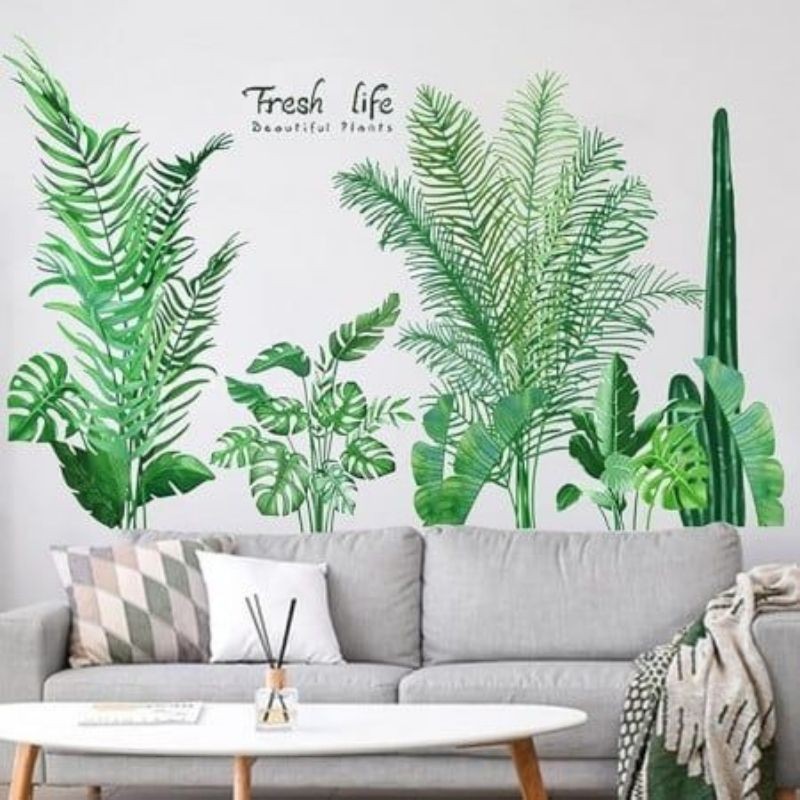
Find inspiration to decorate with wallpaper and stickers in your own personal style.