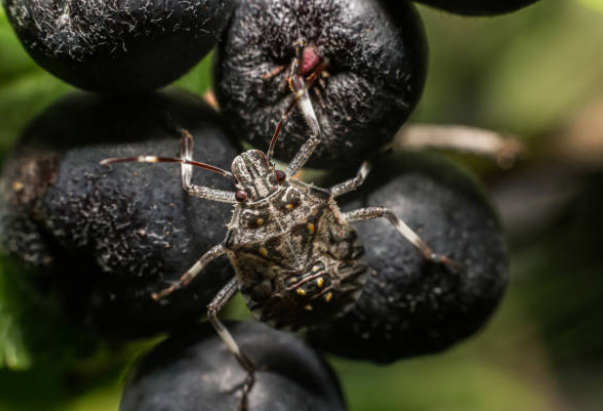
Not having a garden doesn’t mean having to give up growing a tree. Growing trees in pots is possible and the limitations in the choice of species are much less stringent than we are led to believe.
So today I will explain how to transform the terrace or the cemented square in front of the house into a woods.
It is certainly good to follow some rules to best manage this type of cultivation. Those who have been following me for a long time know well, I consider trees to be one of the greatest expressions of life on our planet.
Perhaps you too (as in my case) do not have a real garden. Maybe you have it but that doesn’t stop you from growing your favorite trees in a nice pot, maybe even aesthetically nice, so are you ready? Let’s get closer to this world!

Now indignant comments will be raised but I’ll reveal a discovery I’ve made over the years: all trees are suitable for growing in pots.
Even a Sequoia? Yes, I have one that is several years old and is in a pot.
I am not asking you for acts of faith, we can reason and understand why I can affirm the above.
If you have ever walked in the mountains you will surely have seen beautiful forests of larches, firs and other trees of imposing dimensions.

Well, it sometimes happens that a seed germinates in the crack of a rock and that the tree grows in a very limited volume of earth, while remaining in a perfect state of health. This is because plants have an excellent spirit of adaptation and somehow manage to proportion their aerial part according to the volume of land available.
It is a concept that lies at the basis of a discipline with very ancient (haha) roots: thebonsai art.

What we see in the photo is the Sequoia I was talking about before, a tree that in nature grows over 100 meters with trunks that have impressive diameters.
Here’s what I was telling you, clearly exaggerated but necessary to convey the concept to you a tree will adapt its growth to the resources it finds available.
Now that I have revealed this secret to you, let your eyes dance when you are out and about and you will discover that people have always grown a variety of trees in pots that you never imagined.
Maples, Beeches, Oaks, Hornbeams, … any tree can be grown in pots. In my garden (in addition to the Japanese banana which is technically a herbaceous plant) I have a flowering cherry tree, a Fire Glow maple and a beautiful Gingko. Every now and then I also show them in Instagram stories 😉
Once I understood that I could grow my favorite trees in pots I started studying the practices necessary to obtain the best possible result.
This is a key part of the story.
There are two possibilities:
The first is gradually repot into increasingly larger containersrule that applies to all repottings. Obviously at a certain point we will reach the maximum desired pot size and that will be the definitive home of our tree.
The advantage of these steps supports a good practice: that of Don’t put root systems in a sea of soil where the roots will arrive only after a long time. This is because all the substrate ‘not colonized’ by the roots favors the accumulation of humidity in a volume where there is no one to drink it.
And while the problem may be negligible during the warmer months, it becomes a bit treacherous during the rest of the year, exposing the sapling’s roots to a constant presence of water.
This can potentially cause rot and asphyxiation, particularly when cold and rainy seasons continually soak the soil.
However, I understand that sometimes it is not possible to do otherwise: our grandfather left us a beautiful 1 meter wide terracotta vase and we want to put the lemon we bought in the 20 cm diameter vase?

Three solutions:
- First solution: ignore the problem, sometimes nature overcomes every obstacle and I happened to get lucky. After a couple of years the roots had colonized more or less all the land and I breathed a sigh of relief.
- Second solution: given that the problem is essentially winter, you can think about moving the pot (there are homemade or commercially available supports – such as plantaxxi and pots with built-in wheels – which allow you to have wheels under the pot), sheltered from the rain which risks soaking the soil too much.
- Third solution: the vase is immovable and we can put some waterproof cellophane above the ground so that it is not constantly wet from rain. But be careful in this case: the soil must breathe and therefore on days without precipitation it is advisable to remove it.

If we don’t want to repot directly into the definitive pot we can proceed gradually by moving from a progressively larger cultivation pot and placing everything inside the definitive pot.
I’m already telling you that it works very well as a method because we can concentrate only on the internal pot in terms of watering and fertilizing. Year after year, the cultivation pot will get bigger and bigger until we can move directly into grandfather’s big pot.

Precautions during implantation
Support
Especially with the last technique put in the previous list, but even in the case in which we immediately put the root ball in a much larger pot, it is likely that it will be necessary secure the plant in some way with bamboo supports or similar. I won’t dwell on this part, but it’s right to tell you.
Collar
It should never be buried, as my grandfather said: the roots must hear the bells.

The clod must be kept high just above the ground level, in this way it will drop after the first wetting and we will have to bring some earth back to the surface.

In the first months after planting, especially in the hot months, it is important never run out of water.
Land
Here’s another fundamental aspect!
We have to use a very high quality soil: the presence of coarse aggregates in the mixture, preferably pumice, is essential. The rest of the ingredients can be made up of a mix of peat, fiber and coconut pith.
I highly recommend ONE PLUS, don’t skimp on this aspect because it is one of the key factors. ONE Plus imitates natural soil like no other substrate, do you want to know more? Here is the right article!
No expanded clay on the bottom, for goodness sake.
I should say that a universal potting soil should be used but unfortunately ‘universal’ is now often used to connote first-price products that cost little and rightly contain unsuitable ingredients.
Fertilization
From March to October (practically in the case of deciduous trees it is equivalent to the period of loss of leaves) a mineral fertilizer is used.
I propose some solutions:
- Ace of flowers: perhaps the most complete fertilizer I know, NPK + microelements. It’s a water-soluble to dissolve in the wetting water according to doses and intervals found on the label. Universal, you can use it on practically everything, from balcony flowers to indoor plants. Plus: it can be also used in foliar fertilization. Obviously it is preferable to adopt this type of fertilizer if watered with a watering can.
- If you wet with water rubber, I recommend two other Cifo products that I have been using for years now because they are exceptional: slow release (for flowering plants and green plants). We spread the grains on the surface of the soil and hoe lightly. They have aprolonged action over time (go and watch the video where I talked about slow release) and my advice is to distribute them in March, June and September.
Given the gradual release technology that characterizes them, I have always found them too convenient in terms of price.
Reach pro level
If you want to be a pro, add phytostimulants to your fertilizations:
- Algatron in the previous weeks potential environmental stress (before the cold and the heat)
- Sinergon after stress due to temperatures, parasitic attacks, pruningetc
- Bio gold in the phase prior to any flowering and fruiting.
Pruning
Once you have started with the cultivation of the tree in a pot, the aspect of pruning is relevant. This must first and foremost support the normal development of the plant a littleLet me explain: when the tree has reached the desired maximum height we proceed with one heightjust above a bud if possible, so as not to have a dry antenna on top.

Attention, we are not pollutingwe’re trimming. This it will favor the production of lateral branches and the formation of a beautiful crown.
In the same way we will deprive the plant of all the lateral branches that are too low, thus defining what is called scaffolding that is, between the ground and the foliage.

Even the hair will gradually be managed over the years, trying to give it the desired shapebe it spherical, conical or more spontaneous.
The important thing, as always in pruning, is cut just after a bud.
It is very likely that in the first few years it will not be necessary to intervene in order to let the plant develop freely, you will always have time to do a formal pruning.
Some essences can be brought to be raised as saplings but nothing prevents us from cultivating them multi-stemthis is the case for example of the flowering cherry or the Lagerstroemia which also lends itself very well to being grown as a bush or in any case branched from the bottom.
Don’t be afraid to make mistakes! You won’t kill the plant if you make a mistake in pruningyou will see that she will always push following your indications but will always try to prolong the growth of both the main apex and the secondary ones, always giving you a sort of ‘eraser’ to remedy any errors. This way you will also learn the beauty of having to wait for the rhythms of nature.
I am convinced that you will be able to create masterpieces 🙂
Renew the soil
At some point, we will find ourselves in a situation where the tree will no longer be repotted. However, the soil becomes depleted and loses fertility so something needs to be done.

In March and September of each year we remove the top layer of the soil. How much? 10.20 cm more or less, you will also see where you will arrive before finding the roots.
Yes, from a splash of Biotron, leonardite, essential for renewing exhausted soil, we have already talked about it, I recommend this is fundamental.

Latest Posts Published
care and maintenance » Le Georgiche Nurseries

care and maintenance » Le Georgiche Nurseries

Here’s what work needs to be done

June 1st – Children’s Day: history, meaning and special gifts
How to decorate for Easter?
10 simple ways to «tidy up» your home

Mountain Banana (Asimina triloba): how to grow it and enjoy its rare fruits

Innovative storage and organization solutions for a more airy space
Find inspiration to decorate with wallpaper and stickers in your own personal style.