Cuban oregano is truly an eccentric plant, to give you an idea let’s start by spending a few words on the name, which suggests a certain origin from the Caribbean island, but you should know that this is not the only name it has, in fact it is also known as «Mexican mint», «Spanish (or French) thyme» and «Indian borage».
If the geographic confusion wasn’t enough, let’s add that Cuban oregano is not real oregano. But if we really want to put it, it’s not even mint, borage or thyme.
It is in fact Coleus amboinicus, a species of coleus plant!
Cuban Oregano Care
Exposure
It loves bright positions and is not even afraid of direct sun. In conditions of abundant but shielded light it grows luxuriant 😉
Temperature
It can tolerate short frosts down to -1°C, but it is not at all recommended to expose it for prolonged periods to temperatures below 3°C.
Wetting
Cuban oregano resists drought quite well but it is still advisable to water every time the first centimeters of soil have dried.
It is also not recommended to wet the leaves.
Substrate
The ideal soil for Cuban oregano is light and supplemented with coarse elements. If you want ready-made soil, here’s our always highly recommended One plus!
Fertilization
During spring and summer, when the plant is in full growth, administer fertilizer for aromatic plants, in particular the excellent Biotablets, following the doses on the label.
Propagation
The most common method of propagating Cuban oregano is through cuttings, it is also possible through planting.
Pruning
No real pruning is necessary, just remove the dry leaves if necessary.
Parasites
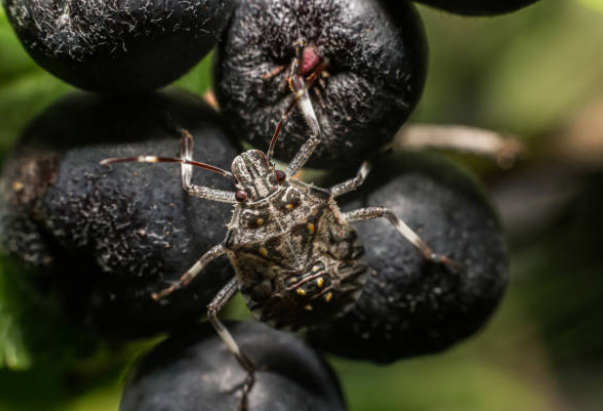
Thanks to its powerful scent, antifungal properties, and insect-repelling oils, Cuban oregano is not often bothered by pests or diseases.
However, mites are a threat, although they are not particularly harmful to the plant, the mites feed on the leaves and affect the health of the plant if not managed correctly.
Another threat is represented by mealybugs.
Description
Unlike common oregano, Cuban oregano grows from a short, thick stem and has slightly fleshy serrated leaves. It is semi-succulent, which means that the leaves retain water but in a smaller quantity than a classic succulent.
It can grow from approximately 30 to 90cm and has a spread of 60 to 90cm.
The leaves are 5cm to 6cm long. The leaves are edible (for humans only!), have a rounded appearance with a terminal tip, while the margins are serrated.
Between the end of winter and mid-spring the plant flowers, turning pink, purple or white. These trumpet-shaped flowers attract bees and butterflies.
It has a strong and pungent flavour, in Cuba it is an essential ingredient in black bean soup, Vietnamese cooks use it as a seasoning for sweet and sour soups. In Puerto Rico it is commonly known as “brujo oregano” (witch’s oregano) and is used to make sautés.
Taxonomic description
Coleus plants are semi-succulent perennials or annuals of the Lamiaceae family, which also includes basil and thyme.
Coleus belonging to the Lamiaceae family, is a genus of annual and perennial shrubs and herbs, some of which are succulent or semi-succulent, such as C. amboinicus. Many species are showy, with bright pink and red leaves and are grown mainly for ornamental purposes.
Cuban Oregano is not pet friendly
By now we have understood, this plant loves to leave a certain confusion in those who approach it and the fact that it is not pet-friendly is the icing on the cake.
Although it is safe for humans, it is toxic to dogs, cats and horses due to the content of essential oils. It can cause vomiting (sometimes bloody), diarrhea (sometimes bloody), depression and anorexia.
Habitat
Cuban oregano thrives in rocky, clay and sandy areas, especially those at low altitudes. It is not certain but it is thought to have originated from the Maluku Islands, Indonesia. However, there are other rumors according to which it could have originated from India or southern and eastern Africa.
Regardless of where it originated, the plant has naturalized in tropical and subtropical climates around the world.
Historical notes
Until recently, Cuban oregano was known as Plectranthus amboinicus.
Coleus, Plectranthus and Solenostemon are three genera of the Lamiaceae family and can, in fact, be easily confused.
Until 2019, Coleus and Solenostemon were grouped into the genus Plectranthus. In August of the same year, however, a group of botanical researchers from the United Kingdom, India, Australia, Malawi, Thailand and France, published an article in the botanical journal PhytoKeys, stating that Coleus and Solenostemon are distinct genera.
P. amboinicus is now considered a synonym of C. amboinicus. Another synonym that can be found is C. aromaticus, as originally described by the English botanist George Bentham.
Curiosity
C. amboinicus bears the name “Cuban oregano” due to its aroma, which resembles that of true oregano (Origanum vulgare). The flavor is also similar but the Cuban oregano has a touch more mint.
Another name for this plant is «pig for the poor», because some poor populations, not being able to afford meat, used to fry the leaves of this plant which, apparently, tastes like fried pork!
Latest Posts Published

care and maintenance » Le Georgiche Nurseries

care and maintenance » Le Georgiche Nurseries

Here’s what work needs to be done

June 1st – Children’s Day: history, meaning and special gifts
How to decorate for Easter?

10 simple ways to «tidy up» your home
Mountain Banana (Asimina triloba): how to grow it and enjoy its rare fruits

Innovative storage and organization solutions for a more airy space

Find inspiration to decorate with wallpaper and stickers in your own personal style.