Today we will talk about something a little curious and particular which once again testifies to theingenuity of plants and the resources deployed by their evolution.
I was about to repot my Philodendron melanochrysum when I noticed these droplets on the stemsin some parts thickly beaded.
Contrary to every rule given to me by my preschool mother, I tasted them and noticed a sugary taste.
Which set off an alarm bell because I immediately started looking for phytomyceous insects like a fury, thinking it was honeydew, even though, in fact, I had never seen it in this way, in drops and above all on the stems rather than dripped on the leaf blades which are instead untouched.
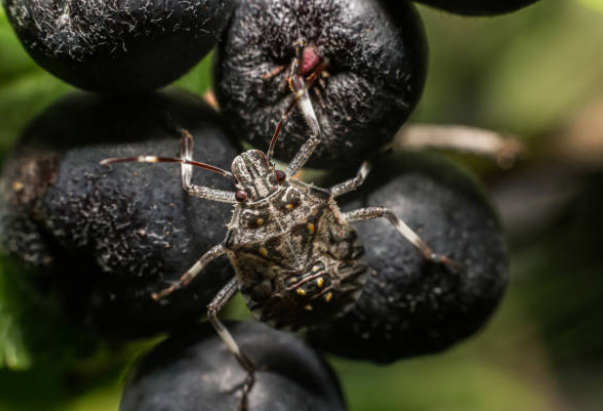
Once the threat of scale insects or other parasites has been eliminated, there is only one option left: extrafloral nectar.
Fasten your seatbelts, let’s go!
First of all, this phenomenon should not be confused with guttationa topic which I will try to talk to you about soon: in that case the drops are in almost all cases observable on the edge of the leaf and we are talking about water (possibly with some dissolved mineral) that exudes from some specific pores of the leaf. Even in this case it is not something alarming but the difference is that the typical sugar concentration of nectar is absent.
Nectar is one sugary aqueous solution that is produced by honey plants (therefore from those plants that provide nectar to bees, various types of insects and birds) through the flowers, with the aim of attracting pollinating insects, greedy for this substance.
In the natural realm, it is a consolidated practice to identify the nectar glands or the nectar liquid itself near the reproductive organs of the plantlike the stamens and pistils. This phenomenon occurs because it is essential to collect pollen and transport it to other destinations.
The main constituents of nectar include a variety of sugars, such as sucrose, glucose and fructose, present in variable proportions. In addition to this, nectar is home to a wide range of other plant chemicals that serve two crucial functions: attract pollinators And deter predators. Carbohydrates, amino acids and volatile compounds act as a lure for specific species, while alkaloids and polyphenols seem to take on a protective role.
Nicotiana attenuata, a tobacco plant native to Utah in the United States, uses a variety of volatile scents to attract pollinating birds and moths. Among the dominant aromas, benzylacetone stands out, but the plant also adds a note of bitter nicotine, with a less evident scent, which could escape the bird’s sense of smell until it has already drunk the nectar. According to scholars, the intent of this addition would be to discourage nectar predators, pushing them to abandon the plant after a single sip and, in doing so, stimulate their visit to other plants. This mechanism maximizes the effectiveness of the pollination obtained by the plant, while minimizing the amount of nectar produced.
Some nectars, such as that produced by the California buckeye (Aesculus californica), contain neurotoxins such as aesculin. In addition to water, nectar is composed of carbohydrates, amino acids, ions, and a wide range of other compounds.
What is nectar used for?
The nectar serves to attract animals so that, by approaching the plant to collect it, they fertilize the flowers.
However, it happens that these nectars are also located in areas where one would think there is no point. In fact they are said extrafloral or extranuptial and are plant glands always responsible for the production of nectar but are not involved in pollination processes.
So: producing nectar is a super expensive activity for the plant, in this article I talked to you about the hearing of plants where I illustrated the research of this Israeli team who discovered how some plants are able to ‘hearing’ the buzzing of the bees, in this case pushing the production of sugary secretions and slowing it down if you don’t hear a fly flying, sorry a bee. Jokes aside, all this shows how plants are careful to optimize this type of activity.
But then why shoot nectar at random on parts of the plant not affected by pollination?
We know well what the nectar we find inside flowers is used for, but what about extra-floral nectar? This, in fact, does not have the same function, as flowers manage to attract pollinators thanks to their colors, something that, for example, a leaf cannot do.
Extranectarian nectaries are structures found in several plant species around the world, which secrete sugars and can be found on various plant tissues. Unlike floral nectars, their main function appears to be that of attract beneficial arthropods. The predominant sugars in extranectar nectars are fructose, glucose and sucrose, but many amino acids, other sugars and micronutrients have also been isolated. The protective effects of extranectar nectaries derive from their ability to attract beneficial arthropods, with particular attention to studies on ants. In some plant species, the flow and the composition of extranectar nectaries can vary in response to herbivore attacksimilar to other activated plant defenses, highlighting the importance of natural enemies for plants possessing extranectar nectaries.
Extrafloral nectaries have been reported in over 3941 vascular plant species belonging to 745 genera and 108 families, 99.7% of which belong to flowering plants (angiosperms), comprising 1.0 to 1.8% of all known species, and there is an interesting study I stumbled upon that illustrates how higher occurrences in observations correlate with approaching tropical latitudes.
It is therefore no coincidence that it is easier to see them on indoor plants but it seems that among the Araceae three genera are essentially involved: Philodendron, Alocasia and Culcasia.
Here I leave you a more complete list! To delve further, I would like to point out this paper and also this other one, which is very interesting.
Darwin understood that extrafloral nectar was highly sought after by insects, although he believed that their visits were not beneficial to the plants. However, the Italian botanist Federico Delpino was the first to recognize the defensive functions of extrafloral nectars in his important monograph on myrmecophyly in the plant kingdom in 1886. His study was inspired by a disagreement with Charles Darwin, with whom he corresponded regularly.
Latest Posts Published
care and maintenance » Le Georgiche Nurseries

care and maintenance » Le Georgiche Nurseries

Here’s what work needs to be done

June 1st – Children’s Day: history, meaning and special gifts
How to decorate for Easter?

10 simple ways to «tidy up» your home
Mountain Banana (Asimina triloba): how to grow it and enjoy its rare fruits

Innovative storage and organization solutions for a more airy space

Find inspiration to decorate with wallpaper and stickers in your own personal style.